Thursday, 24 April 2008

Kosovo seeks EU membership by 2015

EUobserver is reporting today that Kosovo has set its sights on joining the EU in 2015 and is seeking a clear signal from a meeting of EU Foreign Ministers next Tuesday in Luxembourg. From the discussions I had while I was in Pristina a couple of months ago it was made very clear to me that EU accession is a top priority for Kosovo with the EU seen as a key vehicle for providing Kosovo with security and stability.

Montenegro has already prepared its draft application for EU membership and will be seeking candidate status this year, after having signed a bilateral agreement with the EU on Montenegro's entry into the WTO. Ahead of the Western Balkans pack is Croatia which is hoping to conclude its membership negotiations with Brussels by 2009 and become the EU's 28th member state by 2011.

Of course all of this is likely to be made much easier by the French Government's decision yesterday to approve plans for constitutional reform that would see the scrapping of a previous mandatory obligation for all future EU enlargements after Croatia to be submitted to a referendum in France. This had been introduced back in 2005 and was seen as being aimed at Turkey in an attempt to reassure French public opinion about their concerns over any further EU enlargement especially in the run-up to the French referendum on the EU Constitution, which in the end failed. Under the proposal, the decision on whether or not to approve a country's accession to the EU can be taken either by referendum, or by the French Congress (this comprises the National Assembly and Senate), which would have to approve it by a three-fifths majority.

In any event I look forward to the day when Scotland can take its rightful place at the top table alongside many of our neighbours as well as the countries of the Western Balkans.

Wednesday, 23 April 2008

National Conversation comes to Europe

Alex Salmond, our First Minister was in town today together with Mike Russell, our Environment Minister, where they brought the National Conversation about Scotland's future to Brussels - though today was very much the international dimension with the focus on Scotland's potential in Europe.

The level of interest in what is happening back in Scotland over here is very apparent, not least by the fact that there was a packed audience in Scotland House with policy makers from across the different EU institutions, politicians, expat Scots, think tanks and other interested groups and organisations as well as other devolved regions.

For me personally it was a bit of a moment walking in the doors of the Scottish Government EU Office in Brussels and seeing copies of the
White Paper setting out options for Scottish independence. It's hard to believe that it's almost a year since the SNP took power as Scotland's new government.

And what a year we have had! Gone are the dark old days of the previous Lab/Lib Dem Executive which was too scared to fly the Saltire from Scotland House in the heart of the EU quarter, lest heaven forbid Scotland became too visible in Europe. Now we have a Scottish Government in Edinburgh that is more bullish in its defence of Scottish interests with London and willing to take a much more direct approach in its dealings with Europe to ensure Scotland's interests are protected and promoted. And to top it all off, we now have the First Minister of Scotland in the heart of the EU talking about Scottish independence in Europe, moving Scotland forward and the contribution Scotland can make in playing our part globally and taking our global responsibilities.

The First Minister set out where the political debate is at back home - that there is now broad political consensus that the current powers Scotland has under devolution are no longer sufficient and that not only are more powers necessary but the discussion itself has moved on to what those powers should be. Our position in the SNP is clear - we want to give the people of Scotland the right to decide for themselves in a referendum whether they want Scotland to be independent, retain the status quo or have further powers devolved to Holyrood. Latest opinion polls show public support for independence has increased by 14 points to 41% since the SNP's historic victory last May 2007. Opposition to independence has dropped from a high point of 50% to 40%.

The First Minister also made it clear that if the Unionist parties come forward with an alternative (as an outcome of the Scottish Constitutional Commission set up under the Chairmanship of Sir Kenneth Calman to look at Scotland's place within the UK ten years on from devolution) then he can see no reason why this option should also not be on the referendum ballot paper but this all depends on whether the Unionist parties would want to do this. If there are other options then the people of Scotland should be able to have a full and comprehensive debate about everything that is put on the table.

Much was made of Scotland seeking to engage much more positively with Europe, of wanting to emulate the success of other small European nations - Ireland, Denmark, Norway, Iceland, Finland (the so-called 'Arc of Prosperity' countries) and our sharing of values which underline "Scotland's natural place within the mainstream of European social democracy". This was highlighted by firstly the publication of the Scottish Government's Economic Strategy and the setting of key targets for sustainable economic growth (i.e. for Scotland to match the GDP growth rate of the small independent EU countries by 2017 and to raise Scotland's GDP growth rate to the UK level by 2011). Given we are now living in a global economy you don't need to be a large country to access the global markets. The disadvantages of being a small country have been eroded and many small countries are now coming into their own through their ability to use competitive tax policies and their power to design their own economic policies that suits the distinct needs and interests of their country.

Secondly, was the building of a new relationship with local government, working together in a new social partnership based on mutual respect through the signing of a financial concordat in November 2007.

Thirdly, central to Scotland's economic potential are our life sciences, financial services and renewables, where Scotland currently enjoys more than 25% of Europe's marine renewable energy. These are all sectors where Scotland has a comparative advantage in economic growth.

Lastly, with a minority government in Holyrood, the political culture is one of negotiation and dialogue.

While Scotland aspires for a role in foreign policy, the First Minister underlined the extent to which Scotland is limited in what it can do in this regard because of the UK's unwritten Constitution. The anomaly of Scotland's position in Europe is clear - we are inside the EU as part of the UK and yet with very distinct interests we are unable to pursue our own policies that would be more in keeping with Scotland's specific circumstances and needs rather than those of the wider UK. For example, on the euro if Scotland had been developing its own monetary policy Scotland would have joined. Until Scotland can achieve independence, for the moment Scotland can only make progress in those areas where London has little interest, i.e. fisheries.

This point was picked up by Mike Russell, who in his summing up said that Scotland has been able to influence the UK position on fisheries. While the speaking note at recent Fisheries Councils has been developed by Scottish officials in close cooperation with Defra officials, the frustrating part is that Scottish Government Ministers cannot contribute to that discussion. It is the UK Fisheries Minister that gets to sit at the big table and uses the "Scottish" speaking note. Scottish Government Ministers are not allowed to speak - UK Ministers can "on our behalf".

It is a bizarre state of affairs for any country to find itself in. The importance for Scotland to be in the dynamics of those discussions and to have the opportunity to put Scotland's case forward as a Scot from a Scottish perspective rather than have someone else do it for us cannot be underestimated.

All I want is for Scotland to be like any other normal country and for me full independence is the only way in which Scotland can protect and promote its distinctive interests.

Monday, 21 April 2008

Euro Candidate

The SNP met at the weekend for its annual Spring Conference - this time we were at Heriot Watt University on the outskirts of Edinburgh. The atmosphere was electric with over a 1,000 delegates – a sure sign of the party’s growing success and there was much to be cheery about after an extremely successful first year in government.

On the Saturday morning the party held its hustings for candidates going forward to represent the party at the European Parliament elections next June.

I am delighted that I got through to the last seven and thanks to all those who voted for me I am now a candidate. I am very much looking forward to getting out and about round the country, meeting with as many people as possible and getting on with the campaign. We have an excellent array of candidates who are all committed and will work hard. They are (in alphabetical order):

Cllr Drew Hendry

Ian Hudghton MEP

Anne McLaughlin

Aileen McLeod

Duncan Ross

Alyn Smith MEP

Cllr Grant Thoms

Below is the full text of the speech I made at the Euro Hustings:

-------------------------------------------------------------------------------------------------
Fellow Nationalists, I’m Dr Aileen McLeod.

I’ve been Alyn Smith’s head of European policy since he won his seat.

Alyn, as most of you will know, is incredibly hard working.

Not only in his summer work experience trips, but also across the country and in the parliament in Brussels and in Strasbourg all year round, and in nurturing Scottish contacts across Europe.

He never shies away from getting face to face with Commissioners and making sure they take Scotland into account

Alyn Smith and Ian Hudghton are making Europe work for Scotland.

I want to join Scotland’s team and follow in the footsteps of Dr Winnie Ewing, Dr Allan Macartney and Professor Neil MacCormick.

We will win 3 MEP seats next year – and I want to be one of the team.

I haven’t put my name forward for other elections because it’s Europe I’m focused on, I understand Europe, and it’s Europe where I can do the best job for the party.

I know how Europe works.

I know how to get into the Commission at all levels.

I know what it’s like being effective in Brussels.

I know how to make Europe work for Scotland.

Since the SNP Government entered office Scotland’s voice in Europe has become stronger and more effective.

This party and our Government are making an impact.

I could stand here this morning and tell you at great length about full ownership unbundling in the energy market.

And when you woke up you’d agree with me that it is one of the big issues facing Scotland.

Instead, though, I’ll talk about our successes in Europe.

Our political success in Europe has outstripped our football success – even allowing for Scotland beating France home and away.

First, Structural funds:

London wanted to dump Scotland’s funding and the Lib/Lab coalition didn’t argue.

Scotland’s party did.

We ensured that structural funds continued in areas where they will be of key economic and social benefit - including the Highlands and Islands where we won additional funding.

We didn’t quite win the South of Scotland, but that comes back in the next budget round.

Second, Ferries:

It’s the SNP MEPs working with our MPs and MSPs who have led the fight to save our lifeline ferries.

The problem wasn’t Europe, it was the Labour / LibDem coalition whose crass incompetence threatened the very services they should have been protecting.

That’s why Alyn Smith asked the Commission to investigate formally – to clear it up once and for all.

We’re confident he’s right.

Third, Ship-to-ship oil transfer:

To protect the environment in the Forth, we engaged European legislation on Habitats.

Our MEPs worked with our councillors and with environmental groups.

And Tricia Marwick and Bruce Crawford were eloquent when we brought them to Brussels to argue the case.

That’s making Europe work for Scotland.

And there have been other successes. We worked with Scotland’s farmers to improve the Common Agricultural Policy;

We got Brazilian beef banned on safety grounds;

We brought Commissioners to Scotland to see how we are pioneering green energy technology and talk with our University sector about research collaboration.

We were even part of the success in getting Europe-wide mobile phone charges reduced.

Making Europe work for Scotland.

SNP MEPs and their staff work hard to get support from MEPs from other countries for Scotland’s best interests.

For example, there’s that full ownership unbundling.

We’re not convinced that the break-up of Scotland’s energy companies is the best way forward.

We want Europe to consider the Scottish model – a system that encourages competition between energy producers and which would work better if it was in the hands of an independent Scottish government.

That’s better than a strategy which could undermine our energy companies and leave the consumer vulnerable to higher prices and supply interruptions.

Making Europe work for Scotland.

Past glories won’t keep us, though, there are challenges ahead.

Some come immediately to mind.

Climate change and energy policy.

These two issues cannot be separated.

How we generate energy impacts on the environment so climate change targets have implications for how we generate energy.

We will not accept nuclear power.

We want an energy future driven by clean energy sources.

That means renewables;

carbon capture;

and developing energy technologies that are environmentally sustainable.

Our commitment is clear in the ambitious targets our Ministers have already set.

There is a huge European dimension, but Europe should act only where there is clear added value in it doing so.

Scotland can become the green energy capital of Europe by ensuring that Scotland’s distinctive approaches to energy challenges and opportunities are recognised in European policy.

Structural funds

Post-2013 discussions are already underway in Brussels.

Scotland’s European funding was cut from £1.1 billion to £540 million under the 2007-2013 review.

Not because our rural and remote communities have experienced some dramatic economic upturn, unfortunately.

Many of the regions in the Highlands and Islands and in the South of Scotland continue to suffer considerable economic difficulties.

I find that shameful in a country as rich as Scotland, but it’s a cold hard fact and a bitter indictment of the UK’s mismanagement of our resources.

We have to make sure that the difficulties confronting those communities are recognised by Europe until we can solve the problems caused by the UK’s ignorance of the needs of Scotland.

Opening services to competition

Health care and a range of social services are coming under the beady eye of the so-called liberalisers.

Many of you will be familiar with GATS and its less desirable effects.

SNP MEPs have to ensure that any proposals brought forward for Europe recognise the specific Scottish context in which these services are provided.

Our MEPs will have to champion the specific Scottish needs for those services.

Remember, delegates the next five years will see major challenges confronting our MEPs

We have to make Europe work for Scotland and we have to prepare Europe for Scottish Independence

I have the experience, the expertise, the commitment and the know-how to make Europe work for Scotland and to make an independent Scotland work in Europe.

What I need now is your support.

Select me as an SNP candidate to let me get on with the job.

Saturday, 19 April 2008

“We’ve heard the extremists – now lets have sensible debate on EU"

In an earlier entry on this website I advocated the establishment in Scotland of a consultative National Forum in Europe that would provide a non partisan focus for a new and informed debate over EU matters that have a major impact on the lives of Scots. I believe the time is right to think afresh about how we in Scotland engage in EU-level policy discussions and this is something I will continue to pursue.

An op-ed piece on this appeared in today’s Scotsman.

Saturday, 12 April 2008

A new Constitution for Kosova

Kosova’s new Constitution was adopted by the Kosova parliament this week, which is expected to enter into force on 15 June and will pave the way for Kosova and the EU to take over from the United Nations Mission that has administered Kosova since the end of the Balkans conflict in 1999.


The Constitution is based largely on the proposals that were drawn up by the UN’s Special Envoy, Martti Ahtisaari (former President of Finland) in March 2007. It recognises the Republic of Kosovo as an independent, sovereign, democratic, unique and indivisible state, ensures democracy and reflects its multi-ethnic character, with full respect for the rule of law and the highest internationally recognised human rights and fundamental freedoms that guarantee equal rights for all the people of Kosovo. It contains an extensive package of measures to protect minorities, especially the Kosovo Serb community where there are new powers for Kosovo Serb majority municipalities in areas such as healthcare, education. Kosovo will also have the capacity to conclude international agreements and seek membership of international organisations.

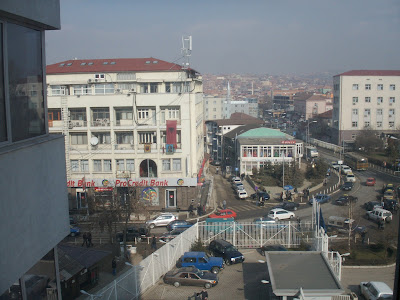
I was fortunate to have the opportunity to spend 3 days in Kosova in February, the weekend after Serbia’s presidential elections. This was my first time in Kosova and my first time in the Western Balkans. Flying in over the mountains to the south was an incredible sight. Kosova is an extremely beautiful country and one that certainly has a great deal of potential. Being there in the days before Kosova’s unilateral declaration of independence was an experience in itself. My passport was stamped UNMIK (UN Mission in Kosovo) just to remind me that Kosova was still under UN authority. On the road in from the airport I saw dozens of UN and KFOR vehicles, be they under the flag of the French, the Swedish or the Italian in amongst clapped out tractors. Posters from Kosova’s elections last November were still on the billboards as well as one advertising Hotel Afa which was offering 20% discount for citizens of countries that promised to recognise Kosovo’s independence.


Photos:


The influence of the US is all but subtle especially driving down Boulevard Bill Clinton, and where the English language used in its written form is American English. Coming into Pristina I was struck by the dozens of flats awash with satellites and washing. There was a real buzz about the place with young people everywhere. Kosova has the youngest population in Europe with over half its population under the age of 25. It has a huge diaspora with over 10% of its population living and working in Switzerland and Germany.

Arriving at our hotel we were greeted with independence – it is what everyone was speaking about Right now achieving independence was all that mattered. There seemed to be great optimism about the future with high expectations and an understanding that there is no going back to where Kosovo was in 1999.

There are certainly many challenges facing Kosova, not least the position and treatment of the 120,000 Serbs living in the North and South of the country. Economic investment in Kosova is very low because of the uncertainty over the current political situation and there is much that will need to be done by both the EU and the international community to help the Kosovan government develop its economy, build the necessary infrastructure and encourage foreign business to invest. An international donor conference is planned for June 2008 to discuss priorities and key areas of need.

Likewise, a central tenet in the Kosovan government’s national agenda is the longer term goal of EU membership. Kosova is already part of the EU’s Stabilisation and Association process. A key challenge will be to ensure national laws respect the EU acquis communitaire to fulfil European standards and obligations.

Interestingly, Kosova (like Montenegro) uses the euro as legal tender but this as I discovered is done outwith any agreement with the European Central Bank and depends only on those euros in circulation.

Since Kosova’s declaration of independence on 17 February there has been much mischief making by some commentators that Kosovo could end Scotland’s European dream. International comparisons between the current situation in Kosova and Scotland cannot be made. They are not comparable. The fractured history of the Balkans has resulted in a very different and unique situation in Kosova where its nationalism is based very much on ethnicity in contrast to our civic nationalism.

36 countries have so far recognised Kosovo’s independence, including the UK, France, Germany, Latvia, Ireland, Belgium, Italy, Estonia, Denmark, Luxembourg, the Netherlands, Poland, Austria, Sweden, Finland, Slovenia, Hungary, Bulgaria, Croatia, Switzerland, Iceland, Norway. Lithuania is about to. There is no collective EU recognition of Kosova’s independence as the EU Council agreed it was for each Member State individually to recognise or not an independent Kosova.

In contrast to its failure to act during the 1999 conflict, the EU recognises that the future of the Western Balkans lies within the EU and that Serbia’s integration within the EU is crucial for ensuring the stability of the region. The EU’s role has thus far been limited but that is set to change following the deployment of an 1800 strong civilian law and order mission (EULEX KOSOVO) which is supposed to assist Kosova’s institutions in developing and strengthening an independent, multi-ethnic justice system and multi-ethnic police and customs service, ensuring they are free from political interference and adhering to internationally recognised standards and European best practices. It is early days yet and there no doubt will be difficult challenges ahead in the run-up to May’s elections in Serbia.

Wednesday, 9 April 2008

Tackling Europe's waste problem

Its been a bit of a week this week in the European Parliament with committees and a mini plenary session in Brussels. Of particular interest was the adoption yesterday of the Environment Committee’s recommendations for the Parliament's second reading on the Commission’s proposals for a new EU waste framework directive. This is essentially about overhauling the 1975 Waste framework Directive, to lay down rules on recycling and to require Member States to draw up binding national programmes for cutting waste production.

The problem remains that Europe generates over 1.8 billion tonnes of waste each year. This amount is growing faster than GDP and less than a third of it is recycled. There are huge discrepancies among Member States when it comes to recycling. Some Member States landfill 90% of their municipal waste, others only 10%.

MEPs want tougher waste recycling targets and incinerators subjected to efficiency criteria when burning waste for energy 'recovery' purposes. Other recommendations include:

MEPs call for total binding targets for waste stabilisation, re-use and recycling - waste production to be stabilized by 2012, compared to the 2009 position. Member States are asked to establish waste prevention programmes not later than five years after the revised directive's entry into force and to determine appropriate specific targets to achieve the 2012 target and further significant reductions in waste generation by 2020;

MEPs also call for targets for reuse and recycling. By 2020, re-use and recycling rates should be increased to a minimum of 50% by weight for household waste and a minimum of 70% by weight for construction and demolition waste and manufacturing and industrial waste. Member States with less than 5% recycling in either category or no official figures would be given an additional 5 years to reach the targets. By 2015 the Member States would have to set up separate waste collection schemes for at least the following: paper, metal, plastic, glass, textiles, other biodegradable wastes, oils and hazardous wastes;

Incineration - For MEPs, a crucial aim is to reduce the amount of landfill and incineration, both of which cause pollution. Incineration is to be regarded as recovery, provided it meets a certain energy efficiency standard;

MEPs want Member States to stick to binding five-stage waste hierarchy - which is designed to prevent and reduce waste production. The hierarchy also lays down an order of preference for waste operations: prevention, re-use, recycling, other recovery operations and, as a last resort, safe and environmentally sound disposal.

It is now for the EU Member States to discuss the Parliament’s second reading, and decide whether they agree with it. If not, there will need to be further dialogue and negotiation in order to reach agreement. MEPs are set to vote on the Parliament's second reading in June. Once agreed it will then have to be implemented and transposed into national law in all 27 EU Member States.

The Waste Framework Directive will have huge implications for Scotland, particularly our local authorities which remain very much at the sharp end of European policy, not least in terms of budgetary impacts and its implementation.

How Scotland compares.

Scotland has increased the amount of waste that it recycles and composts from 4.5% in 2000/01 to 29.8% in 2006/07. The latest recycling/composting rate for municipal waste in Scotland is 29.8%. Back in January the Scottish Environment Secretary, Richard Lochhead announced the Government's new direction on waste with its plan for a "Zero - waste" strategy and is presently consulting on new targets, including new targets aimed at increasing recycling and cutting down on waste sent to landfill and limiting incineration. The amount of Municipal Waste (MSW) being recycled or composted is to be increased to 60% by 2020 and a new target of 70% by 2025. Landfill from MSW is to be reduced to 5% by 2025. No more than 25% of MSW is to be used to generate energy by 2025 and large, inefficient incinerators are to be rejected.

In March 2008 the new SNP administration in Fife Council announced that it planned to exceed government requirements by ensuring all household waste was either recycled, composted or sent to waste treatment. In 2002 only 2% of waste avoided landfill. That has already increased to about 38% and the first target is to increase that rate to 47% by 2010/11. That figure will then need to increase to 64% by 2012/13.

In any event let’s see what the outcome is between the Parliament and Council over the coming months.

Tuesday, 8 April 2008

Preparing for possible climate change conflicts

Heres an interesting piece worth a look at – a report by the EU’s High Representative for Common Foreign and Security Policy, Javier Solana and the EU’s External Relations Commissioner, Benita Ferrero-Waldner, on climate change and international security.

The report was adopted by EU leaders at the Spring European Council last month and discussed again this week in the European Parliament’s Foreign Affairs Committee. An energy security strategy is the third part of the EU’s emerging energy policy following the publication of the Commission’s green energy plans and its internal energy market package.

Solana basically makes the point that climate change is already having a profound impact on international security. While mitigation and adaptation efforts are important he warns against three key international security threats in particular that the EU and the wider international community need to be prepared for:

  1. reduction of arable land, widespread water shortages, diminishing food and fish stocks, increased flooding and droughts will lead to conflicts between states over dwindling global resources.
  2. rising sea levels in coastal regions and islands will not only cause economic damage but there is also the issue of loss of territories and border disputes and its implications for oil, gas and fishing resources if territories or borders change, or are submerged under the sea. We are already seeing the effects of competition for greater access to, and control over, energy resources with the rapid melting of the Arctic ice caps and the race to the North Pole, where it is estimated that there is some 25% of the world’s gas and oil reserves untapped in the Arctic Ocean. Last August the Russians sent a submarine to the North Pole to plant a flag in its seabed, claiming this territory and its resources as its but Canada, Denmark and Norway are also trying to establish their claims. Writing in this month’s Foreign Affairs, Scott Borgerson argues that unless Washington leads the way toward a multilateral diplomatic solution, the Arctic could descend into armed conflict.
  3. As a direct consequence there is the possibility of millions of “environmental” migrants or refugees by 2020 fleeing the effects of climate change.

Solana warns that the multilateral system is at risk if the international community fails to address these threats, with greater divisions and resentment likely between North-South and South-South (China, India), between the major emitters and those who are affected by it the most.

The report underlines the need for greater “carbon diplomacy”, to raise awareness of the impact of climate change on security and reinforce the capacities of those countries most likely to be severely affected, not least from Africa to the Middle East, from Latin America to central and southern Asia. Other recommendations include greater EU disaster response and conflict prevention capabilities, boosting cooperation and political dialogue with non-EU countries and interestingly develop and EU Arctic Policy. So now we know.